Recent Posts

Monday, November 11, 2013

Apologia Junior Chemistry and Physics

This is a review.

We got a chance to use a really unique science program from Apologia Educational Ministries


We love Apologia and have used their products around here for years.  But, always for our older kids.  This time around, we used this for the younger set of students around here.

The curriculum is called Exploring Creation with Chemistry and Physics from the Young Explorer Series, which is designed for ages K-6.  It was written by Jeannie Fulbright.   Ms. Fulbright has a very easy to understand, observational tone.
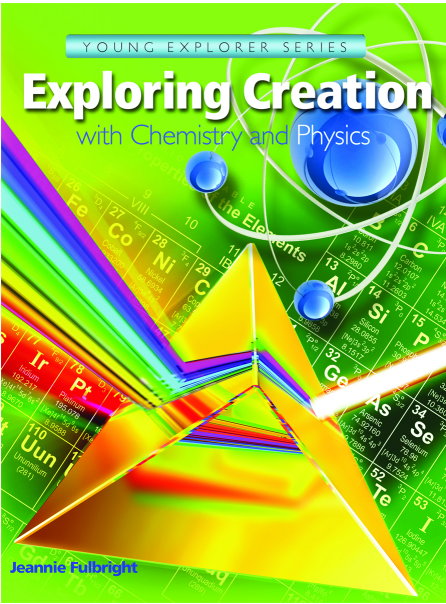


Yes, that was chemistry and physics for your kindergartner through 6th grade students!  So, A-man and S-girl got a chance to do science.....real science.

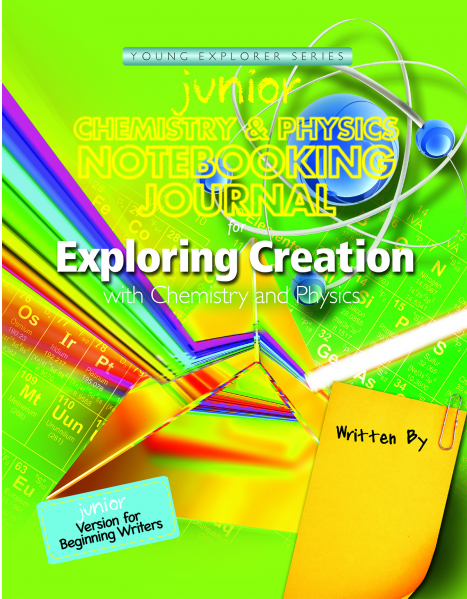
This course has a total of 28 lesson.  This particular curriculum also has a notebooking component to use alongside the textbook.  We used the Chemistry and Physics Notebooking Journal for Exploring Creation with Chemistry and Physics Junior Edition


All of the Apologia textbooks all do a good job of letting you know what is in the books and also how to use them, in a true step-by-step guide.

There are tips and just basics of what you need to know before you start.  For this book, they have n answer key for the question asked in the book, and also a supply list divided by lesson.  Actually, at first glance, the lists are long and detailed, and a little intimidating.....but a lot of the stuff you will already have at your house.   

The list will have things like a graduated cylinder, a turkey baster, aluminum foil, magnifying glass, empty toilet paper tube, WintOGreen Life Savers, or a small LED.  See?  A few real science things and lots of junk from your house. 

So, how do you teach chemistry and physics to little kids????

D-man, who is taking chemistry this year, could not believe that I was even going to attempt to teach A-man and S-girl chemistry and physics.  He kept saying stuff like, "there is no way you can teach them that stuff!  It can't really be chemistry!"  I handed him the book and told him to take a look.  So, he took a look.

Here is what they cover:

  • Chemistry and Physics Matter
  • Moving Matter
  • Building Blocks of Creation
  • Compound Matter
  • Multitude of Mixtures
  • Mechanics in Motion
  • Dynamics of Motion
  • Work in the World
  • Sound of Energy
  • Light of the World
  • Thermal Energy
  • Electrifying Our World
  • Mysterious Magnetism
  • Simple Machines

Yup, real chemistry and physics.  Obviously, they are not using calculations and equations, but they are definitely teaching and introducing the concepts and scientific law behind true chemistry and physics.

So, you start by reading the lesson.  I read this aloud to A-man and S-girl...but, really, A-man probably would have been okay reading it on his own. The lessons are probably longer than your younger kids will be used to at 15-20 pages long.  But, the good news is you don't have to do all the pages at once. 

They have a suggested  schedule that you can follow....if you don't want to come with up your own.  They recommend working 2 days a week, which gets you through each lesson in 4 sessions, or 2 weeks.  You don't have to follow their schedule and can just do it at your own pace.  So, even though a schedule of 2 days a week should have seemed very doable, we didn't follow it exactly since we were in the middle of the move.  Some weeks we did 2 lessons, and some we didn't.  The good thing was, that kept this course fun for the kids and didn't overwhelm me.  (Though, if we were in a different place and had been settled in our house, I totally would have followed their 2 lesson a week plan.)

One of their suggestions  in the "how to use this book" is to have the kids tell you what they learned, especially if they are too young to write that sort of thing down.  I found it pretty interesting to see what A-man and S-girl took away from the lessons....usually they were completely different things.


Within the reading, there are projects and "Try This" where you use the stuff from your supply list to show your students how chemistry and physics works.  Like sticking a bamboo skewer through a blown up balloon without popping it.  Anyone know what that teaches?  Anyone?  Beuller?  Beuller?  It actually shows how polymer molecules twist around the skewer and create an airtight seal.

After the reading and trying things in the textbook, you can work on the stuff in the notebooking journal.  It has a little bit of everything in it.  There is copywork, using scripture....this is  Apologia, afterall.

They have more experiments or projects to try called "Test It Out".  Here is one from Lesson 11 (that we haven't gotten to yet).  In this lesson, we will learn about Thermal Energy.  The Test It Out explores more by having them try Thermal Expansion, with an easy to try experiment of filling an empty soup can with hot water, putting that in a bowl and then putting it in the freezer....and then checking on it the next day.  Easy to do.  Easy stuff you already have at home.  Quick-ish results.


 There are coloring pages, vocabulary words, suggestions for other books and websites that have more information on the concepts being covered. 


 At the back are already printed activities, like minibooks, flipbooks, matchbooks,  that you just have to assemble to use.   This one is for Lesson 8 called "Work in the World" and covers the different kinds of energy...Chemical, Kinetic, Nuclear, Coal, Solar, Bio Fuels, etc. 

In the notebooking journal, there is an activity called Fascinating Facts where they are supposed to write (if they can) what they remember about the lesson.  They can draw pictures and write a few things down.  Here is where I understand Apologia's philosophy, in theory, but not necessarily in practice.  They recommend that you let your child decide what was an interesting or important fact.  Okay.  So, far I am still with them. There are no right or wrong answers.  The idea is to give them autonomy and keep science fun.  Like I said, I understand their thinking....in theory.  I just have a problem with there being no right and wrong answer.

Even though we didn't delve into this super deeply because of our move, and barely scratched the surface of what the books had to offer, I still have a strong opinion on this curriculum.  I say the same thing D-man did.  Wow!  They really teach them this stuff!  This curriculum really teaches physics and chemistry in a way that younger children can understand and try it.

 I have officially added this to our lesson plans so we can continue to work through the book at their suggested 2 days a week plan.

I am really curious to see how my younger kids do once they get into the upper level sciences because my older kids never delved into this stuff when they were this age.  I think it is a fabulous idea to introduce the "hard" sciences early on, just like Algebra concepts, because even if they don't totally get the scientific laws they are learning, at the very least, they won't  be scared of it when they officially get there when they are older.  Right?

You can get the Exploring Creation with Chemistry and Physics textbook for $39.00 and the Junior Notebooking Journal to go along with it, for $24.00

Take a look at what other TOS Reviewers thought about Apologia's Young Explorers Exploring Creation with Chemistry and Physics.


Thursday, November 7, 2013

IXL Learning

This is a review.

IXL is another one of those great products that we have had the privilege of reviewing more than once.  We got to try it out back in the summer of 2012 too!


IXL is both a math and language arts on-line program.  The language arts work, at this point, is only for grades 2 through 4, but their math, is PreK-12.


The on-line math membership is for PreK - 12.


The on-line language arts membership is for grades 2 - 4.....but they are working on adding additional grade levels.  


Click on the links to get a more detailed look at what skills are covered under each membership.  But, here are the highlights of what your membership benefits will be:
  • Comprehensive coverage of K–12 math curriculum. Your kids won't miss a thing!
  • Interactive language arts exercises for grades 2–4.
  • Unlimited questions in over 2,000 skills.
  • Fun and colorful practice formats.
  • Questions that adapt to your child's ability, increasing in difficulty as they improve.
  • Immediate feedback and question-specific explanations to solidify understanding of each concept. (My kids really liked this part) 
  • Audio for all pre-K to first-grade math skills.
  • Weekly e-mail updates on your child's progress.(I loved this feature!) 
  • Informative, detailed reports pointing out successes and trouble spots.
  • Awards and certificates for you and your children to print out as they reach important milestones. (Not my favorite...see why...below.) 
  • iPad app for mobile math practice. (We don't have fancy-schmancy things like Ipads...but other reviewers really liked this option to do IXL on them.)

We mostly used the math portions of IXL and just sort of played around with the language arts sections.  This time around, A-man (3rd grade) and S-girl (1st grade) used IXL. 

All I did was create my account and then register them on the parent page.  I even got to create a little cartoon version of them.  Then whenever they logged in to work, they just picked themselves and went to work.  IXL keeps track of what they do, from how much time they spend to what they work on....and how they do in every area.  As the parent, I can log on and take a look, but they also send me reports in my e-mail account to keep be posted.

Here is a sample of some of the report information available in the parent page.  This is what A-man did in a particular time period.  He mastered place values in whole numbers.  He needs improvement with word names for numbers, and he is doing "satisfactory" in identifying factors.


I really like IXL for a few reasons. 

1. I like all the detailed information available in the reports and progress reports.  So, even if they work on IXL when I am not physically present, I totally know how much time they actually spent and what they worked on. 

2.  I think it is always a good idea to use different teaching styles, wording of problems and approaches (even games) with kids.  I think that it gives you a great sense of whether they are really "getting" the concepts or not.  For example, I want the kids to know what to do with math, whether you use the words "subtract", "take away", or "minus".  IXL uses a slightly different approach and wording of problems than our current curriculum, so sometimes the kids would get caught in not quite understand what they were being asked.  When they would have problems, it was just a chance for Rainman or I to explain that the words can be used in place of each other.

3.  I also liked it because it just gave them good old fashioned practice with their numbers, adding, subtracting, multiplying, etc.  Sort of like the old concept of using flashcards to really get your math skills drilled into your brain.

4.  The kids liked it because they would get awards/certificates when they did well and mastered a topic.  (I didn't love this - because if we printed the certificates - we ended up using a lot of ink....but that is just good, old, frugal mom talking!)

5.  I like IXL is because your child has access to all grade levels and can work wherever they want to/need to and they don't even need to know what "grade" level they are working in.  So, for example, if they are behind where they should be....say only doing 1st grade work, but they are chronologically in the 3rd grade....you can hide the grade level notations, so they don't know it.  This also works in reverse and your child can work above grade level.

Here is where I will tell you a little story:

L-girl got to use IXL the last time we reviewed it.  This time, I only signed up A-man and S-girl.  One day, L-girl was bored and asked if she could use A-man's account and do some IXL.  I am no dummy, so I said she could.  She logged on, went to the 6th grade math stuff and worked on stuff for maybe 10 or 15 minutes. 

Fast forward to the next day, when A-man sat down to do his IXL work for the day.  I was actually in the other room and I kept hearing him exclaim at the computer, "What?" "Wait!"  "Uggg!!!"  I asked him what was wrong.  He, in typical, male fashion, said, "Nothing.  I got it, mom."  I asked him if he was sure and whether or not he wanted me to come help walk him through the questions.  Nope.  He had it.  So, I left him alone.  He was at it for a while.  I heard less and less verbal comments from him.  Then he finished his time for the day and informed me that he had mastered the lesson.

Then, he said, "Mom!  I know what happened.  L-girl (no, he didn't call her that...he used her real name) was on and switched it to 6th grade math and didn't change it back.  I just mastered 6th grade math!"

I love that he was challenged.  I love that he ended up figuring out how to complete the problems on his own, without any help from Rainman or I.  I love how proud he was of himself that he had done 6th grade math....and done it well!

I can see where it would also come in handy for your child to be able to go backwards and do some "easy" math from their past when they need a little mental encouragement or boost in their self esteem, that they can do stuff that once upon a time they thought was hard.  You know?

We didn't "use" the language arts part of IXL.  We just played around a bit, but from what I saw I liked it for the same reasons I like the math portions.  It gives them the strong background skills to solidify what is being taught in our language arts curriculum already.  Sort of like the flashcard concept in math...with knowing which word is a noun or adjective.


There is definitely enough content in IXL to use it as a full curriculum for math and, I think, for the grades represented in the language arts, as well.  However, we will continue using our year long subscription as a supplement to what we are doing in our physical textbooks.

IXL can also line up with your State standards and "Common Core" stuff.  You do not want to get me started on the discussion of my feelings on Common Core....so, I will just leave it as you can line up what you teach with those things....if you care to. 

So, now for pricing, right?  There are a few ways to go about membership with IXL, a monthly plan or a yearly plan.  The monthly price is $9.95 per month and the yearly plan is $79 for 12 months (there are additional costs to add more students).    So, if you can come up with the funds for a yearly membership, you will be saving money.

Go take a look and see what the other TOS reviewers thought of IXL for both math and language arts. 


Monday, November 4, 2013

If You Were Me......

This is a review.


We got the coolest kids books to review.  They all started with "If You Were Me and Lived In...." then there would be a country name.  We actually got to read four of the titles and see what it was like for the kids that lived in.

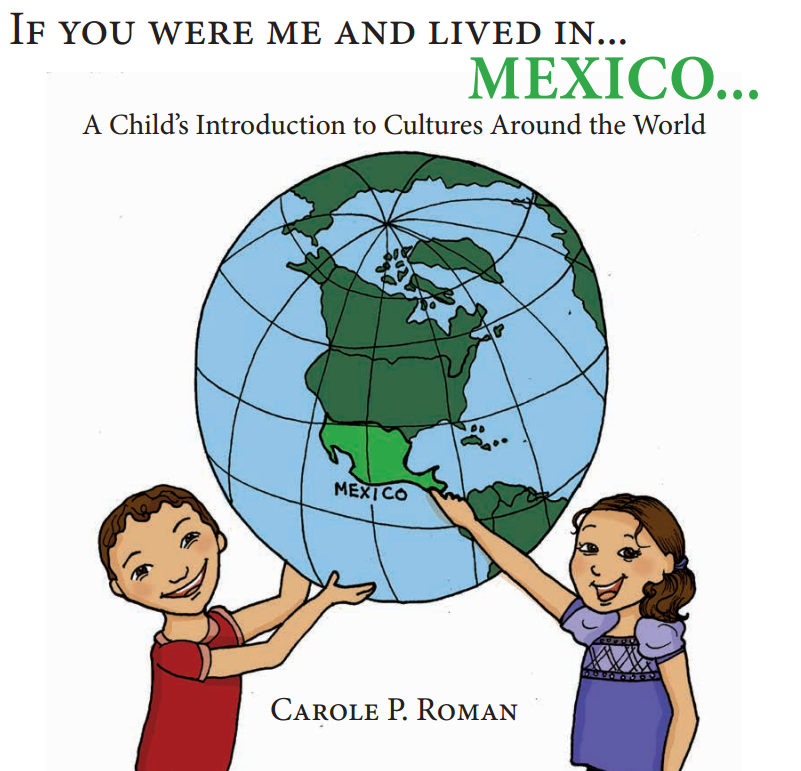
If You Were Me and Lived In....Mexico
If You Were Me and Lived In....France
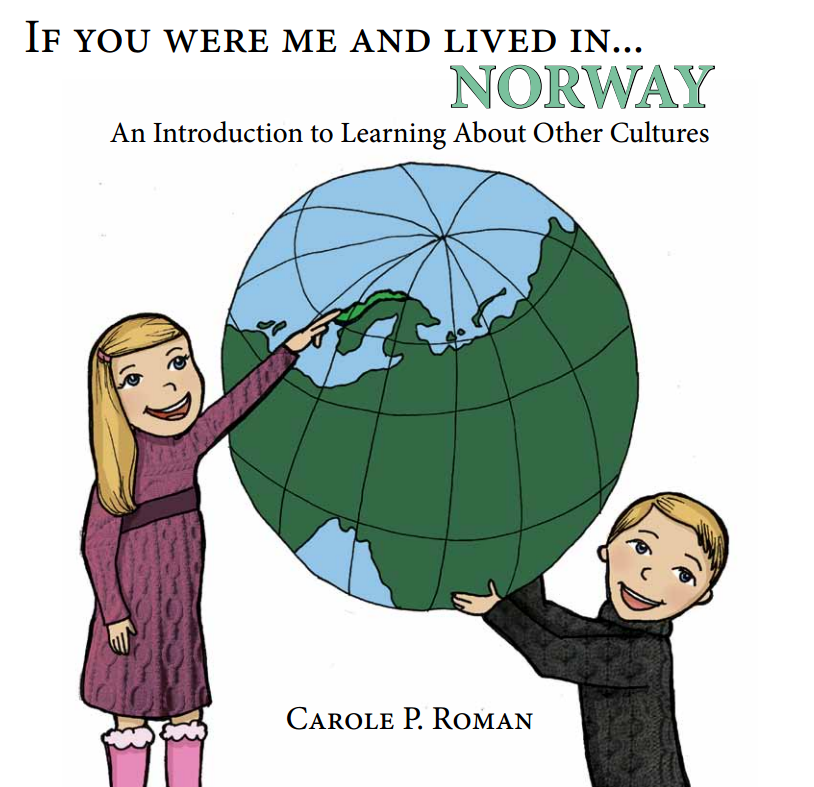
If You Were Me and Lived in....Norway (new one doesn't have its own link yet)
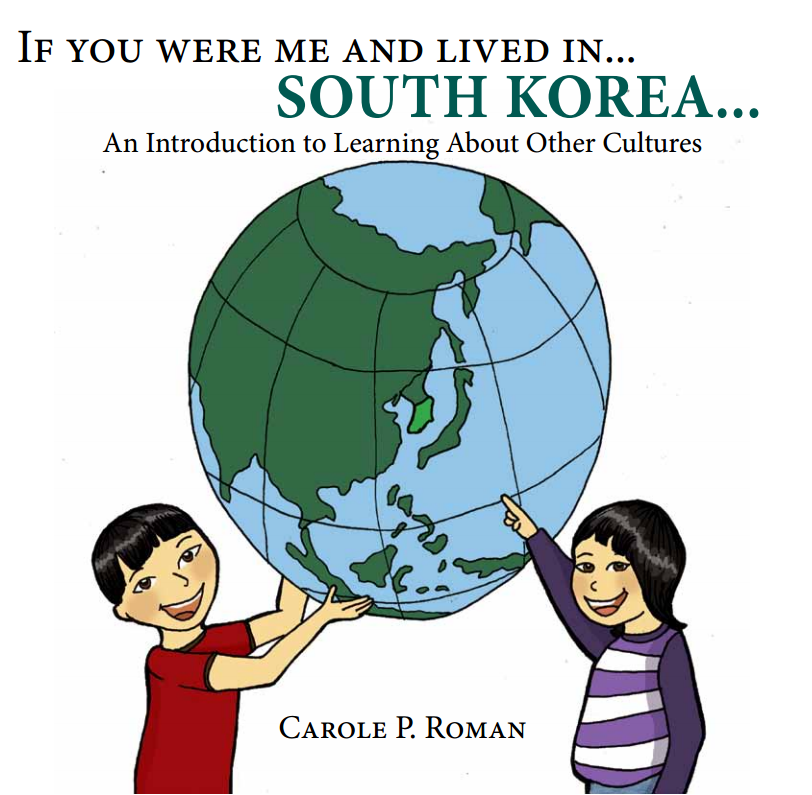
If You Were Me and Lived In....South Korea

These books are all by Carole P. Roman (with Away We Go Media), author of the award winning Captain No Beard. 

CNB_KIRKUS_LOGO.png


These are simple little children's books that are designed for ages PreK to 8 as an introduction to learning about other cultures.  I opted to get the real paperback versions of these books, so the kids and I could curl up and read them together.  As a fun bonus, we were sent an inflatable globe that we used to find the countries before we read the stories and our own passport.

All of the books followed a similar theme and taught the kids things like the capital of the country, common names for both boys and girls, what kind of money is used in the country, what you would call your mom and dad.

If You Were Me and Lived In....Norway was the one I was most excited about because of my Norwegian heritage.  My mother is 100% Norwegian.  I even traveled to Norway, in high school, for a short time with a choir.  I loved the sites and the hearing the familiar cadence and way certain words were said that I had heard back home.


(Side note:  Aren't the kids sweaters adorable on the cover???)
 

For me, this book brought back memories of open faced sandwiches and vaflers, seeing the traditional dress that the book showed for Syttend Mai.  It also gave me an opportunity to share some of the other things I remembered about Norway with the kids.

I read these with A-man, S-girl, and V-girl and they all loved them. 

I did things a little differently the first time I read them, I read them to each of them individually so they could take whatever time they needed to find the location we were talking about on the globe. (A-man has a tendency to be a bit of a know it all in this area and I knew he wouldn't give his sisters time to search around the globe and find the country we were taking about!)  They could also ask whatever questions they wanted to and not be interrupted by siblings. 

They really liked these books and they were not just "read them once and done" books.  So, after the first time through, I read them with all three of them together and, as expected.....they fought over the globe.  Something that I didn't discover until I had read the books already (A-man was actually the one that spotted them) was that included at the back of each book is a pronunciation guide for all the "foreign" words in the books. 

If You Were Me and Lived in....France was another fun one for me.


I have been there too.  When D-man and A-man were little, Rainman had a short stint working for KLM in The Netherlands and we would take weekend trips via train all around Europe.  I was able to show them some of our pictures of our trip....like the one with their brother and sister in front of the Eiffel Tower....just like the kids in the books.


One of the things that I loved best about our time living in Amsterdam is that we got to see how people really lived.  We got to go to the grocery store, bakery, butcher and shop alongside locals.  We got to live in a little house that had a little refrigerator because they go to the store almost daily there.  There is no stocking up like we do here.  We got to walk just about everywhere and because of this, we got to peek into a lot of windows on the way to and from.  (They weren't real big on window coverings) We got to spend time in people's homes seeing how they decorated, what they ate, how they served their drinks.    We got to see the local playgrounds.  We got to see the dance hall.  We got to see into their real lives.....not just the highlights of what to see when you are traveling through a new place.


I think the thing I liked most about these books were that they did the same thing.  They weren't necessarily showing things from a tourist perspective....if that makes sense.  Although, they did mention some of the things people come to their country to see.  I mean, really, you can't really mentioned France without the Eiffel Tower, right?  But, you got to see, in a simplified, childlike-way, what their lives were like....the family at the dinner table...the family at the cafĂ©....the kids on their way into school.


Is it the same as actually going to these countries and living there?  No.  But, it is a great start at showing your kids how people live in different countries. The same as them...yet different.  We had a lot of good conversations about these different countries.  Yes, it helped that I had actually been to some of these places before, but we even had good conversations about Mexico and South Korea where I hadn't physically been.


These books were designed as an introduction to cultures around the world, and that was certainly true for us.  It got me excited about the possibility of traveling with the kids again to far off and distant places.  It also, I think, planted the seed in my kids that it would be fun to go somewhere new and try some new foods or experiences. 

There isn't anything wrong with that now, is there?  Really, I thought these books were fun and didn't really think of them as "school"...nor did my kids.  But, you could easily use them as a jumping off point for a whole curricula study around the country.

You can get your own copies of the books in the If You Were Me and Lived In....series for about $9.00 right now. There are Kindle versions of these books available, if you are that kind of hi-tech mom.  They are $0.99.  The Norway book is a bit more than the others (probably because it is new).

Take a look and see what other TOS Reviewers thought of the Carole P. Roman, If You Were Me and Lived in....series.